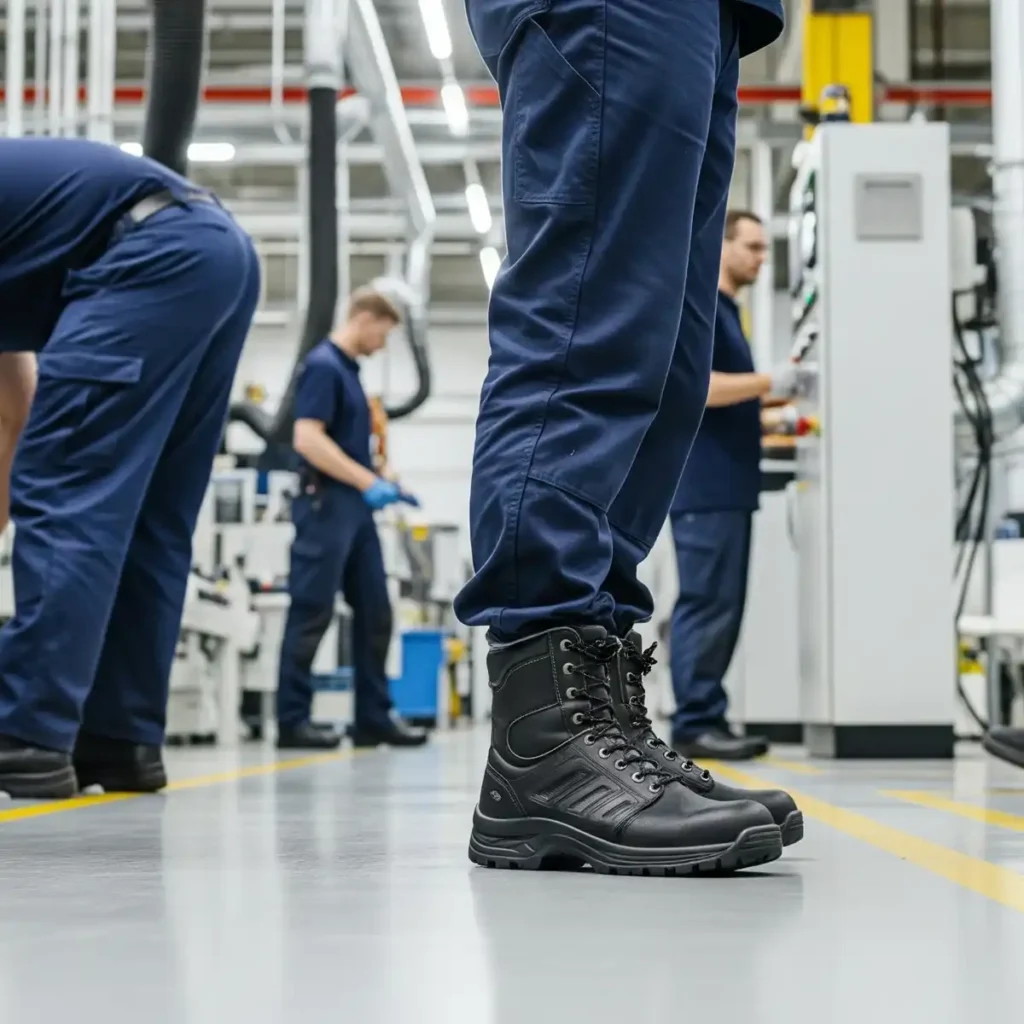
When choosing orthotic insoles, many people focus only on arch height, material firmness, or cushioning performance. However, one essential factor is often overlooked: an insole does not work independently—it must function together with the shoe as a complete support system.
The same orthotic insole may perform very differently in safety footwear and athletic footwear. Safety shoes prioritize protective certification, toe-room clearance, and stability, while athletic shoes place greater emphasis on flex points, dynamic cushioning, and movement compatibility.
If the insole does not match the shoe, its support may be reduced. It may also cause toe pressure, rubbing, heel instability, or even compromise the original protective performance of safety footwear.
- Higher Arches and Firmer Materials Are Not Always Better
The main purpose of an orthotic insole is to support the arch, stabilize the heel, and redistribute pressure during standing, walking, or physical activity. It may help relieve certain types of discomfort affecting the sole, heel, ankle, or knee.
However, this does not mean that a higher arch or firmer material will automatically provide better correction.

Excessive arch support may create pressure under the arch. A thick forefoot section can reduce the internal height of the shoe, while an overly deep heel cup may raise the heel in a low-cut shoe.
An effective combination should consider:
- The user’s foot shape and areas of discomfort;
- The internal length, width, and depth of the shoe;
- The shoe’s flex point and overall stability;
- The intended work or sporting activity;
- The performance of the complete shoe-and-insole system.
A randomized controlled trial involving people with flat feet found that both 3D-printed customized insoles and conventionally manufactured custom insoles improved foot and ankle function. There was no significant difference in functional improvement between the two groups, although the 3D-printed group reported higher satisfaction.
This suggests that manufacturing technology alone does not determine effectiveness. Fit, comfort, and compatibility with the actual footwear are equally important.
- Matching Orthotic Insoles with Safety Shoes: Certification Comes First
The key difference between safety footwear and ordinary footwear is that safety shoes may provide protection against impact, compression, puncture, static electricity, electrostatic discharge, or electrical hazards.
For this reason, replacing the insole is not simply a question of whether it physically fits inside the shoe.
Confirm That the Insole Is Approved for the Footwear
ASTM F2413-24 warns that replacing or adding aftermarket footbeds or inserts may cause safety-toe footwear to no longer meet the standard, potentially invalidating its ASTM marking. ASTM F2413-24
A similar principle applies to European safety footwear. Some manufacturers specify that safety and occupational footwear may only be used with insoles that have undergone type testing with the relevant shoe model. Using an uncertified insole may invalidate the footwear’s type approval.
In ESD-protected, antistatic, conductive, puncture-resistant, or electrical working environments, users should first confirm:
- Whether the insole is approved for the specific footwear model and protection class;
- Whether replacement will affect the electrical resistance of the footwear;
- Whether the complete shoe–insole–sock–flooring system needs to be tested;
- Whether the workplace specifies approved insoles or requires retesting. Keep the Forefoot Low-Profile
The protective toe cap in a safety shoe limits the available space above the toes. If the forefoot section of the orthotic is too thick, it may raise the foot and cause the toes to contact the toe cap, resulting in pressure, rubbing, or numbness.
An orthotic insole designed for safety footwear should generally provide:
- A relatively thin forefoot section;
- A length and width compatible with the shoe last;
- Stable but not excessively high arch support;
- A heel cup that sits securely without curling;
- Sufficient remaining space for natural toe movement. Do Not Automatically Stack It on Top of the Original Footbed
If the original footbed is removable and the manufacturer permits replacement, it should generally be removed before installing the orthotic insole.
Stacking two full-length insoles may reduce internal space, compress the toes, raise the heel, and increase rubbing around the shoe collar.