Properties Performance Comparison and Suitable Footwear
Overview. HI-POLY, also known in the footwear trade as recycled bonded PU foam, is an insole material designed around breathability, moisture absorption, basic cushioning, and flexible processing. It is used in athletic, casual, work, safety, outdoor, and functional insoles. It can also serve as a comfort or moisture-management layer in an orthotic insole.
Important qualification. HI-POLY is not a globally standardized formulation. Different suppliers may use different recycled PU feedstocks, binders, densities, hardness levels, and functional additives. Product selection should therefore be based on the exact grade, technical data, and test reports rather than the material name alone.
1 What Is HI-POLY
HI-POLY is primarily a polyurethane material, not EVA. It is commonly produced by shredding PU foam offcuts or recovered foam, adding PU binder and optional functional additives, and rebonding the mixture into blocks or rolls. The material is then sliced, laminated, die-cut, and heat-pressed into insoles.
The rebonded structure normally creates many interconnected voids between foam particles. These pores help air and moisture move through the material and make HI-POLY useful in footwear worn for long periods. Depending on the formulation, manufacturers may add activated carbon, antimicrobial or antifungal agents, fragrance, conductive materials, cork particles, or other functional fillers.

Figure 1 HI-POLY foam sheets and common material characteristics
Source: Sansd Group product page Open Cell Cross Link PU Foam for Shoe Insoles
2 Main Material Properties
2.1 Porous and Breathable Structure
Because HI-POLY is formed from rebonded PU foam particles, it normally contains many connected pores that allow air and water vapor to move through the material. Repeated compression during walking may also promote limited air exchange inside the shoe.
Actual shoe climate depends on more than the foam. Upper materials, socks, cover fabric, adhesive coverage, insole thickness, wear time, activity level, and ambient temperature all influence breathability. A breathable foam cannot keep a poorly ventilated shoe permanently dry.
2.2 Moisture Absorption and Management
HI-POLY can absorb part of the perspiration generated by the foot and increase the area across which moisture can disperse. It is especially relevant for people with sweaty feet, hot or humid climates, prolonged standing and walking, enclosed work footwear, safety boots, hiking shoes, and athletic shoes.
Absorption is not the same as drying. After use, a damp insole should be removed and dried naturally at room temperature. Radiators, hair dryers, and high-temperature drying can damage the foam, adhesives, or cover fabric.
2.3 Cushioning and Impact Attenuation
PU foam provides compressive cushioning. HI-POLY can attenuate part of the impact generated during walking, standing, and light activity, reducing the harsh feel of a rigid shoe base. Its real performance depends on density, hardness, thickness, particle size, bond quality, compression set, and any added heel or forefoot cushioning zones.
- Softer grades emphasize comfort and conformity.
- Medium grades balance cushioning and stability.
- Firmer or higher-density grades are generally more suitable for work footwear or support layers.
2.4 Antimicrobial and Odor Management
Some HI-POLY grades contain antimicrobial agents, antifungal additives, or activated carbon to help manage microorganisms and odor. These are optional formulation features, not automatic properties of every HI-POLY foam. Any antibacterial, antifungal, deodorizing, or odor-control claim should be supported by a test report for the exact material grade.
2.5 Recycled Material Content
HI-POLY commonly uses PU production offcuts or recovered foam as feedstock. This can reduce the use of virgin foam, but it does not mean that every grade has the same recycled content or that the finished insole can be recycled again. Buyers should confirm the percentage and source of recycled input, the scope of any GRS or third-party certification, the binder and additive system, and whether an end-of-life recovery route exists.

Figure 2 Recycled polyurethane foam rolls used as insole sheet material
Source: FULE Jinjiang Footwear Material product page Breathable Polyurethane Foam Sheets
2.6 Customization and Lamination
HI-POLY can be laminated or combined with:
- mesh or moisture-absorbing textiles
- EVA stabilization layers
- TPU or polypropylene arch-support shells
- heel cushions and forefoot impact pads
- gel components
- activated-carbon layers
- conductive fabrics for specially designed antistatic products
This flexibility allows the material to be used in simple comfort insoles as well as more complex athletic, work, safety, and orthotic constructions.
3 Typical Technical Properties
Published values vary by supplier and grade. One HI-POLY insole sheet specification lists the following reference properties. These values illustrate a possible range and should not be treated as a universal HI-POLY standard.
| Property | Reference value |
| Density | 200 to 220 kg/m3 |
| Hardness | 25 to 35 Asker C |
| Tensile strength | > 2.0 kg/cm2 |
| Elongation | 40% to 80% |
| Tear strength | > 0.8 kg/cm |
| Compression | < 15% |
| Shrinkage | < 1% |
Other published HI-POLY series list densities of approximately 190 to 270 kg/m3 and hardness values of approximately 20 to 40 Asker C. The purchasing specification should always identify the exact grade and test method.
4 Performance Comparison with Common Insole Materials
| Property | HI-POLY recycled PU | EVA | Molded PU | Memory foam |
| Structure | Rebonded PU particles | Usually closed-cell foam | Integral molded PU | Slow-recovery PU |
| Breathability | Good | Fair to limited | Fair to good | Fair |
| Moisture absorption | Good | Limited | Depends on cell structure | Moderate |
| Cushioning | Moderate to good | Moderate | Good | Soft initial feel |
| Resilience | Moderate | Moderate | Good | Slow recovery |
| Resistance to flattening | Depends on density and bonding | Moderate | Usually good | May retain impressions |
| Water resistance | Moderate; drying required | Good | Formulation dependent | Moderate |
| Structural support | Depends on shape and reinforcement | Can be heat formed | Can be molded | Limited by itself |
| Typical cost | Low to medium | Low to medium | Medium to high | Medium |
| Best suited to | Breathability, moisture and basic cushioning | Light weight, water resistance and shaping | Resilience, durability and comfort | Soft conformity and pressure dispersion |
This comparison describes general material tendencies. Density, thickness, hardness, cell structure, cover fabric, and overall insole geometry may change the result substantially.
5 Suitable Footwear
5.1 Safety and Work Footwear
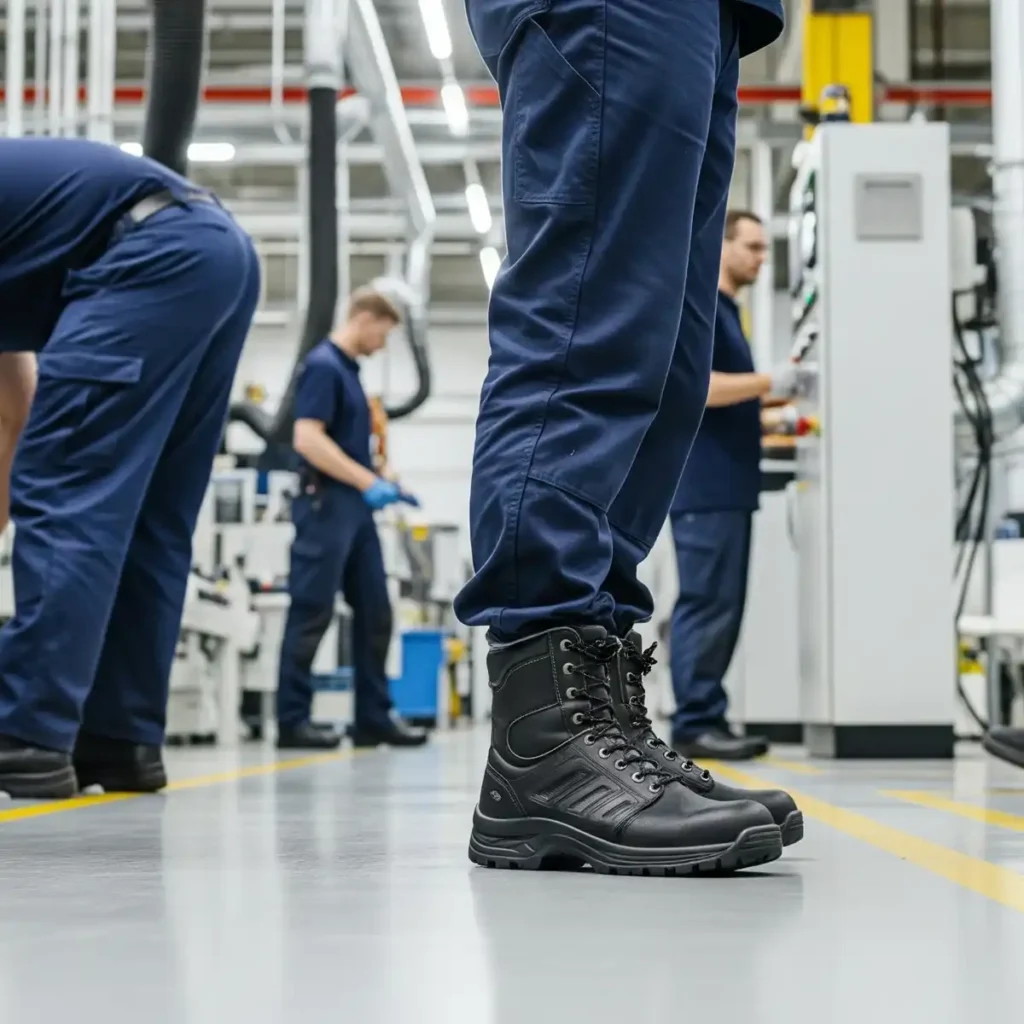
Safety footwear is often enclosed and may be worn for many hours on hard floors. HI-POLY can provide moisture absorption, basic cushioning, and odor-management options for factory shoes, logistics footwear, construction boots, slip-resistant service shoes, and other occupational footwear.
A work-footwear grade should normally prioritize:
- medium or higher density
- a relatively low-profile forefoot
- durable and breathable cover fabric
- verified repeated-compression performance
- length and width matched to the shoe last
Replacing the footbed in safety footwear may affect toe-cap clearance, heel retention, antistatic properties, ESD performance, or product certification. The insole and shoe combination should be checked or certified for the intended workplace requirement.

Figure 3 Finished work insole combining HI-POLY with high-elasticity foam
Source: Henan Bangni Biological Engineering product page Work Boot Comfort Insole
5.2 Athletic Shoes
HI-POLY can be used in running, walking, cross-training, court, children’s athletic, and outdoor sports shoes. An athletic insole may combine it with a heel cushion, forefoot impact pad, or lightweight support shell. High-intensity use also requires evaluation of rebound speed, repeated compression, forefoot flexibility, weight, in-shoe slip, and long-term thickness retention. A low-density comfort grade may not be suitable for long-distance running or repeated high-impact activity.
5.3 Hiking and Outdoor Shoes
HI-POLY is useful where perspiration management and basic cushioning are important. A typical outdoor construction may combine a durable moisture-absorbing cover, a HI-POLY comfort layer, an EVA stabilization layer, a TPU or polypropylene arch-support component, and a heel cushion. The insole should be removed and dried promptly after wet use.
5.4 Casual and Everyday Shoes
The material’s moderate cost and soft feel make it suitable for casual sneakers, canvas shoes, commuting footwear, children’s shoes, removable full-length insoles, leather-shoe liners, and walking insoles. Low-volume footwear requires a thinner forefoot so the insole does not compress the toes or raise the instep excessively.
5.5 Leather Shoes
Thin HI-POLY constructions can add moisture absorption, light cushioning, and odor control to enclosed leather footwear. The forefoot should remain low-profile, the cover fabric should resist abrasion, the edges should not curl, and the insole should remain dimensionally stable after absorbing moisture.
5.6 Orthotic Insoles
HI-POLY can serve as the cover, moisture-management layer, or cushioning layer of an orthotic insole. A flat sheet of foam is not an orthotic structure by itself. Corrective or biomechanical function normally comes from a foot-specific arch contour, deep heel cup, medial or lateral posting, TPU, polypropylene, or EVA support shell, pressure-relief geometry, and zoned density or hardness.
6 Antistatic and ESD Applications
A specially formulated HI-POLY product can incorporate conductive ingredients and be laminated with conductive fabric for antistatic or electrostatic-discharge applications. Ordinary HI-POLY should not be assumed to be ESD compliant. Electrical behavior also depends on the cover fabric, adhesive, contact with the shoe base, socks, flooring, and environmental humidity.
Some suppliers advertise HI-POLY or PU antistatic insoles with resistance values in the range of 10^5 to 10^8 ohms. Such values apply only to the tested product. Safety and ESD footwear should be evaluated as a complete shoe-insole system.
7 Benefits and Limitations
Benefits
- can incorporate recycled PU foam
- good breathability and moisture absorption
- basic cushioning at a relatively low weight
- compatible with many cover fabrics and support components
- customizable density, hardness, thickness, color, and additives
- generally lower cost than premium molded PU or ETPU systems
Limitations
- quality varies significantly between suppliers
- lower-grade products may shed particles or lose thickness early
- resilience is often lower than premium molded PU or ETPU
- absorbed moisture must be dried out of the material
- environmental and functional claims require product-specific evidence
8 Purchasing and Validation Checklist
Before approving a HI-POLY grade, review:
- material origin and recycled content
- density and Asker C hardness
- thickness and thickness tolerance
- tensile strength, tear strength, and elongation
- compression set and thickness retention after repeated loading
- rebound, moisture absorption, air permeability, and drying time
- hydrolysis, aging, odor, and abrasion performance
- cover-to-foam peel strength
- antimicrobial, antifungal, and restricted-substance reports
- antistatic or ESD resistance where applicable
- fit and performance in the intended shoe model
Conclusion
HI-POLY is a recycled-PU-based insole material valued for breathability, moisture absorption, basic cushioning, moderate cost, and processing flexibility. It can be used in safety, work, athletic, hiking, casual, and leather footwear, and as a comfort layer in an orthotic insole.The name alone does not guarantee high resilience, structural support, antimicrobial performance, or ESD compliance. Final performance depends on density, hardness, bond quality, functional additives, insole geometry, and compatibility with the shoe. For ESD applications in particular, electrical performance must be validated at the level of the complete footwear system.