Material Principles Performance Advantages Applications Selection and Validation
Supercritical foaming is not a separate plastic. It is a physical foaming process that uses carbon dioxide or nitrogen. The process can be applied to elastomers such as EVA, TPU, TPEE and PEBA. By creating a uniform microcellular structure, it can reduce weight while improving cushioning, resilience and dynamic durability. In insole products, material performance must be designed together with thickness, hardness, arch geometry, top cover and available shoe volume.
Key Conclusions
- The main value of supercritical foaming is lower weight, fine cell structure and adjustable cushioning and resilience.
- TPU is well suited to durable work insoles, PEBA and TPEE to high-resilience sports insoles, and EVA to cost-controlled products.
- A material name cannot replace finished-product validation. Purchasing decisions should focus on density, compression set, dynamic fatigue and batch consistency.
1 Basic Principles of Supercritical Foaming
During production, high-pressure carbon dioxide or nitrogen is dissolved in the polymer. Rapid depressurization, heating or another change in thermodynamic conditions causes the gas to nucleate and expand inside the material, creating a large number of fine cells. Common routes include autoclave foaming, bead foaming, sheet foaming and supercritical-fluid injection foaming.
Material formulation → Preform or extrusion → High-pressure gas saturation → Cell nucleation and expansion → Stabilization → Insole processing
Compared with conventional chemical foaming, physical foaming can reduce the use of chemical blowing agents and support a more uniform cell structure. Environmental performance still depends on energy use, raw-material sourcing, recyclability and production waste; the word supercritical alone is not sufficient evidence of sustainability.
2 Main Advantages of Supercritical Materials
Lightweight design The microcellular structure reduces polymer use per unit volume and can lower insole weight, particularly in thick cushioning and athletic insoles.
Cushioning Cells deform recoverably under load, absorbing part of the impact at foot strike. Density and thickness can be adjusted to tune softness and firmness.
Resilience and energy return Properly foamed TPU, TPEE and PEBA can reduce internal energy loss and recover more quickly after compression.
Dynamic durability A suitable resin and cell structure can improve thickness retention under repeated compression for prolonged walking, standing and training.
Tunable cell structure Pressure, temperature, saturation time, depressurization rate and formulation influence cell size, density, hardness and surface condition.
Formulation and structural flexibility Different hardnesses, densities and zoned combinations can be developed and laminated with top covers, stabilizers and heel pads.
3 Comparison of Common Material Systems
| Material system | Relative cost | Performance focus | Suitable insoles | Selection notes |
| Supercritical EVA | Lower | Low weight, cost efficiency and mature processing | Casual, general athletic and entry-level functional insoles | Check long-term compression and loss of support at very low density |
| Supercritical TPU | Medium to high | Resilience, fatigue resistance and durability | Safety, work, training and prolonged-standing insoles | Validate hydrolysis resistance, hardness and dynamic compression |
| ETPU beads | Medium to high | Elasticity, repeated-compression resistance and bead molding | Running, athletic and work insoles, plus localized cushioning | Check bead fusion and surface flatness |
| Supercritical TPEE | Higher | Fast recovery, structural response and fatigue resistance | Training, running and thin high-resilience insoles | Excessive hardness may feel firm underfoot |
| Supercritical PEBA | High | Low density, high energy return and low-temperature flexibility | Racing and premium athletic insoles | Requires tight control of cost, shrinkage and dimensional stability |
4 Insole Application Scenarios
The following images illustrate insole fitting and use in different footwear categories. The pictured products are not necessarily made with supercritical foam. Actual material claims must be confirmed through supplier technical data and test reports.
Running and Training Shoes
Running insoles typically emphasize low weight, forefoot flexibility, heel cushioning and rapid recovery. PEBA, TPEE and high-resilience TPU can support performance products, while EVA is suitable for more cost-sensitive ranges.

Figure 1 Fitting an insole into a running shoe
Image source The Outfitters CURREX RunPro
Work and Safety Footwear
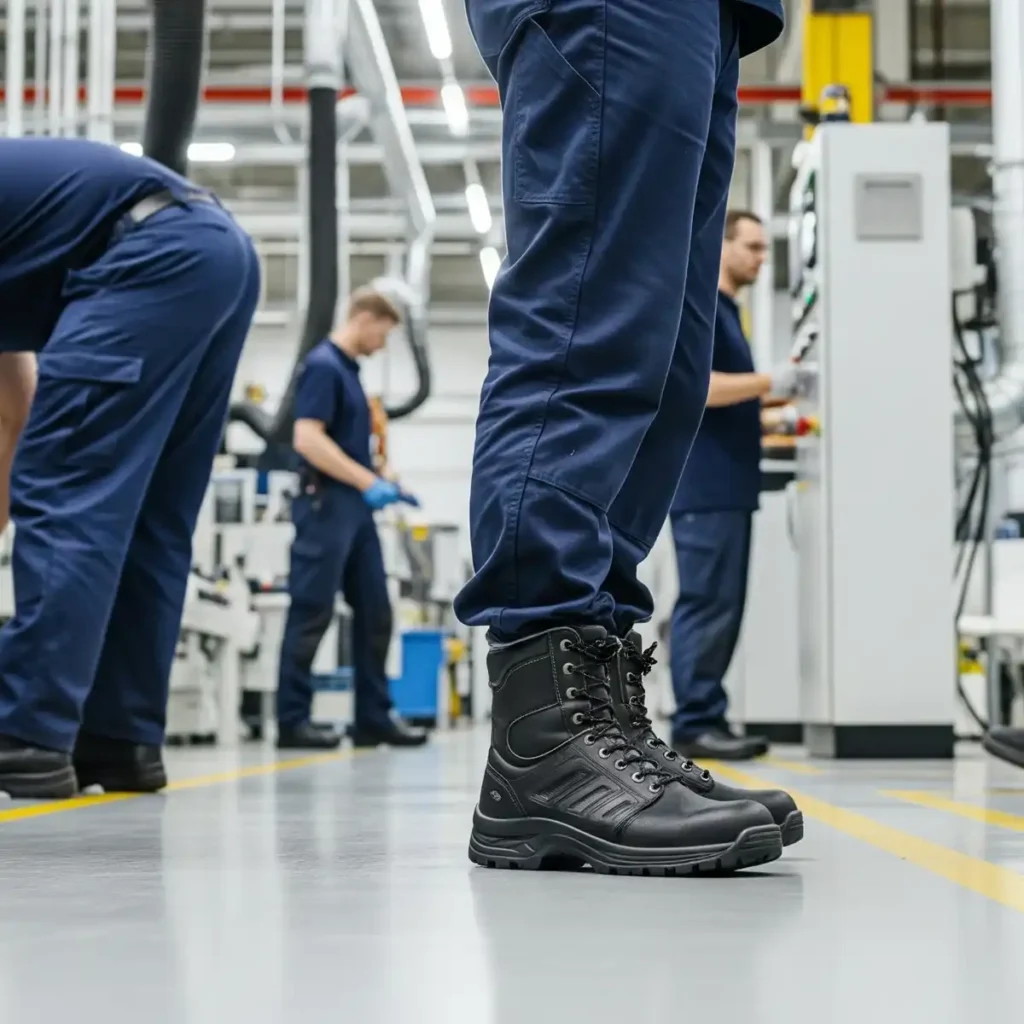
Work insoles must combine cushioning with durability, stability and thickness retention under prolonged compression. Supercritical TPU or TPU-based blends are suitable candidates. For antistatic or ESD footwear, the insole must form part of a complete dissipative path with the sock, sole and floor, and the system should be validated at finished-footwear level.

Figure 2 Fitting an insole into a work boot
Image source StrideSoles Work Boot Orthotics
Outdoor and Hiking Footwear
Hiking insoles must balance cushioning, stability, fatigue resistance and internal volume. The foam should work with an abrasion-resistant top cover, anti-slip treatment and an appropriate arch profile to prevent movement on uneven terrain.
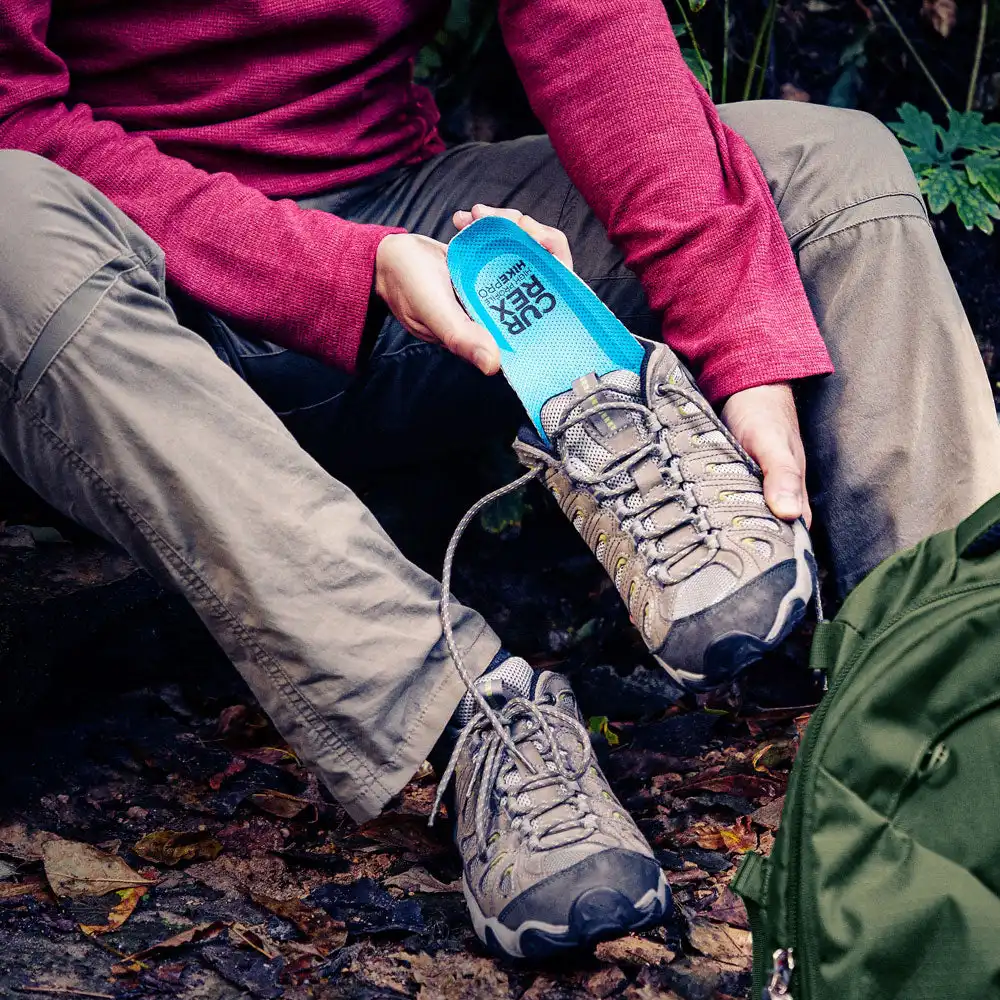
Figure 3 Fitting an insole into hiking footwear
Image source CURREX HIKEPRO
5 Product Development and Purchasing Validation
Commercial names for supercritical foam do not replace a complete specification. First define the target footwear, user weight range, available shoe volume and desired underfoot feel; then match the material and structure to those requirements.
- Base resin type, exact grade, and whether the system is a single polymer or a blend
- Foaming medium and process route: autoclave, sheet, bead or injection foaming
- Finished density, hardness, thickness and batch tolerances
- Rebound, compression set and dynamic compression fatigue
- Tensile strength, tear strength, peel strength and flex resistance
- Hydrolysis, heat, cold and yellowing resistance, plus dimensional shrinkage
- Odor, VOCs, restricted substances and recycled-content percentage
- Top-cover moisture management, abrasion resistance, slip control and lamination strength
- Electrical resistance and finished-footwear compatibility testing for antistatic or ESD products
6 Limitations
Higher rebound does not automatically mean greater comfort, and lower density does not automatically mean better performance. Foam that is too soft or too thick, or an arch shape that does not match the foot, can consume shoe volume, reduce stability or create local pressure. Closed-cell foams generally have limited moisture absorption, so an absorbent top cover, ventilation holes or another moisture-management structure may be required.
For orthotic insoles, supercritical foam is generally more suitable as a cushioning layer. Defined arch support, heel control and medial or lateral correction still depend on foot-matched geometry, zoned stiffness and stable structures such as PP, TPU or high-density foam.
7 Conclusion
Supercritical foaming expands the design options for lightweight, fine-cell, responsive and dynamically durable insoles. EVA suits cost- and scale-oriented products, TPU suits durable work and sports insoles, and TPEE and PEBA suit premium products that emphasize rapid response and energy return. Final performance is determined jointly by the material, process, density, hardness, thickness, arch geometry and footwear fit, and should be judged through finished-product testing rather than the material name alone.